FREE DELIVERY ON ORDERS OVER R2,000 | UPCOMING EVENTS
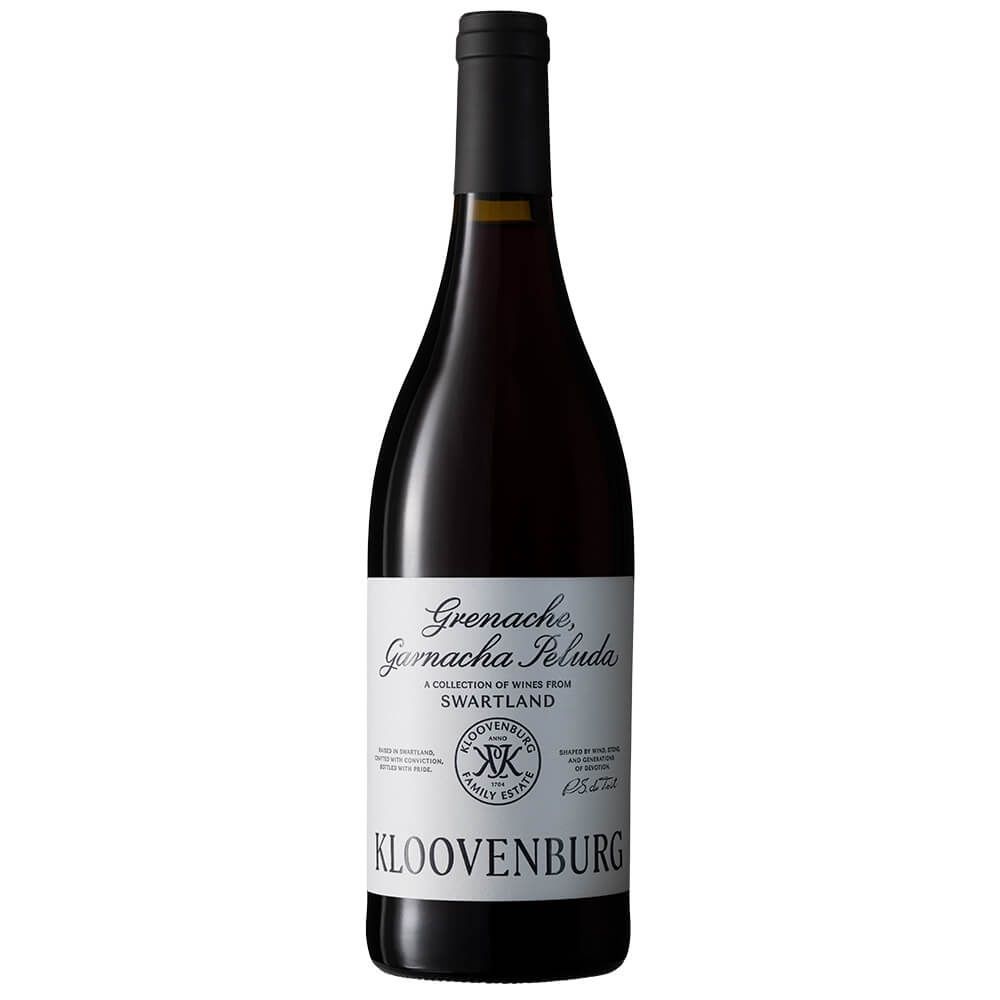
Kloovenburg Grenache & Garnacha Peluda 2024
R250.00
Price incl. VAT (15%) R32.61
In stock: 1 available
1
Kloovenburg Grenache & Garnacha Peluda 2024
What is Garnacha Peluda? Oxford Companion to Wine that it’s a synonym of Garnacha Peluda, a "downy-leafed variant of Garnacha Tinta". It has similarities to Grenache Noir and has smaller berries with thicker skins. “The grapes reach phenolic ripeness at lower sugar levels than Garnacha Tinta so the wines are generally lower in alcohol (no more than 13,5%) It occurs in France and Spain.
All grapes are handpicked during the early morning hours and then cooled overnight in a temperature – controlled room at 5 °C. 60% of these grapes are then crushed and destemmed, whilst the remaining 40% is fermented as whole cluster. Natural fermentation takes place in open fermenters. Extraction is obtained by light punch – downs twice a day. After fermentation is completed, the wine is left on the skins for another seven days and then pressed to neutral oak barrels. Malolactic fermentation is completed in the barrel. The wine is then racked from the lees and given a low dose of sulphur. The wine spends a total of 10 months in the barrel before it is bottled
Tasting Notes: A refreshing, light-purple Swartland red featuring a blend of 72% Grenache (foudre-matured) and 28% Garnacha Peluda (cement-tank aged). It is characterized by aromas of rose petals and dried herbs with a palate of bright cherry, strawberry, and medium acidity. It finishes with fine tannins and a flinty finish.
Food Pairing: Typically features bright red fruit notes (cherry and strawberry) with a natural, refreshing acidity, making it flexible enough to match both lighter and more savory, rustic disheLeaner meats dishes like lamb, venison and turkey. Poached salmon, braised duck breast or savoury vegetarian dishes. Serve slightly chilled.
Now combined in a single wine, this is a stylish pairing of 72% Garnacha and 28% Garnacha Peluda, the latter being something of a Kloovenburg speciality. Subtly wooded in foudres and cement tanks, it's a vibrant, energetic, garrigue-scented red with succulent pomegranate and summer pudding fruit, racy minerality and spicy 40% whole clusters. 2026-32. 94 - Tim Atkin
ANALYSIS: ALC 13.67% | TA 5.1g/L | pH 3.64 | RS 2.0g/L
Customer reviews
Reviews only from verified customers
No reviews yet. You can buy this product and be the first to leave a review.
Display prices in:ZAR